Evaporation and condensation
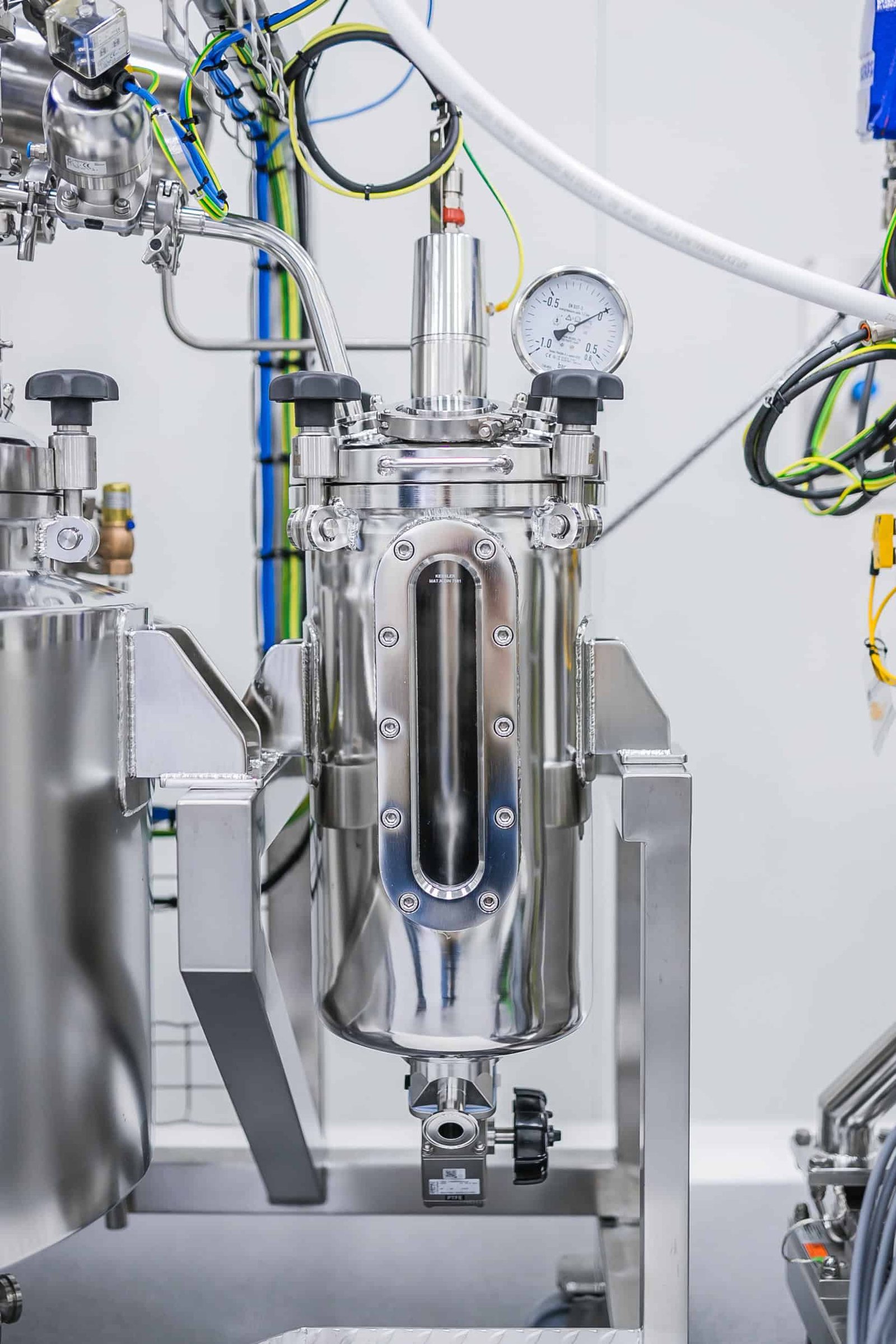
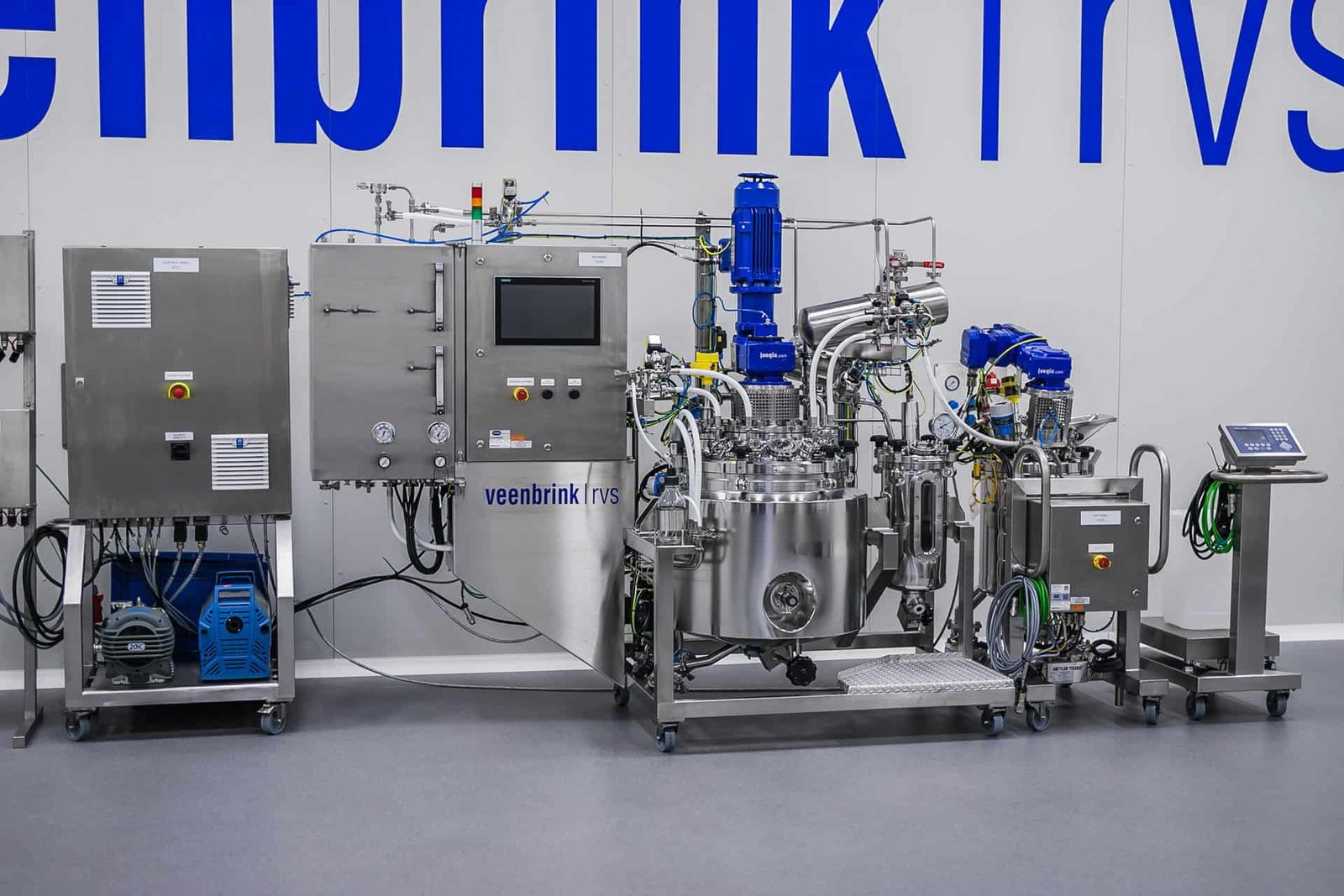
Distillation involves separating two liquids dissolved in each other by the difference in boiling point of the two substances. The solution is heated in the reactor by means of a heating jacket. This causes the liquid with the lowest boiling point to evaporate first. This means that the substance changes from a liquid phase to a gas phase. The gas moves to the condenser, which contains a coil with cooling water running through it: the substance is cooled back to a lower temperature and returns from the gas phase to the liquid phase. The liquid is collected from the condenser in a separate collection tank and the liquids are separated.
Distillate and residue
The liquid with the lowest boiling point will therefore evaporate first and be cooled by condensation and collected in a separate collection tank. This liquid is called the distillate. The liquid remaining in the reactor has a higher boiling point and will therefore remain behind. This liquid is called the residue. In distillation, one is often interested in the distillate, while in evaporation, one is often interested in a solid that remains after boiling a mixture of a solid in a liquid, such as salt in water.