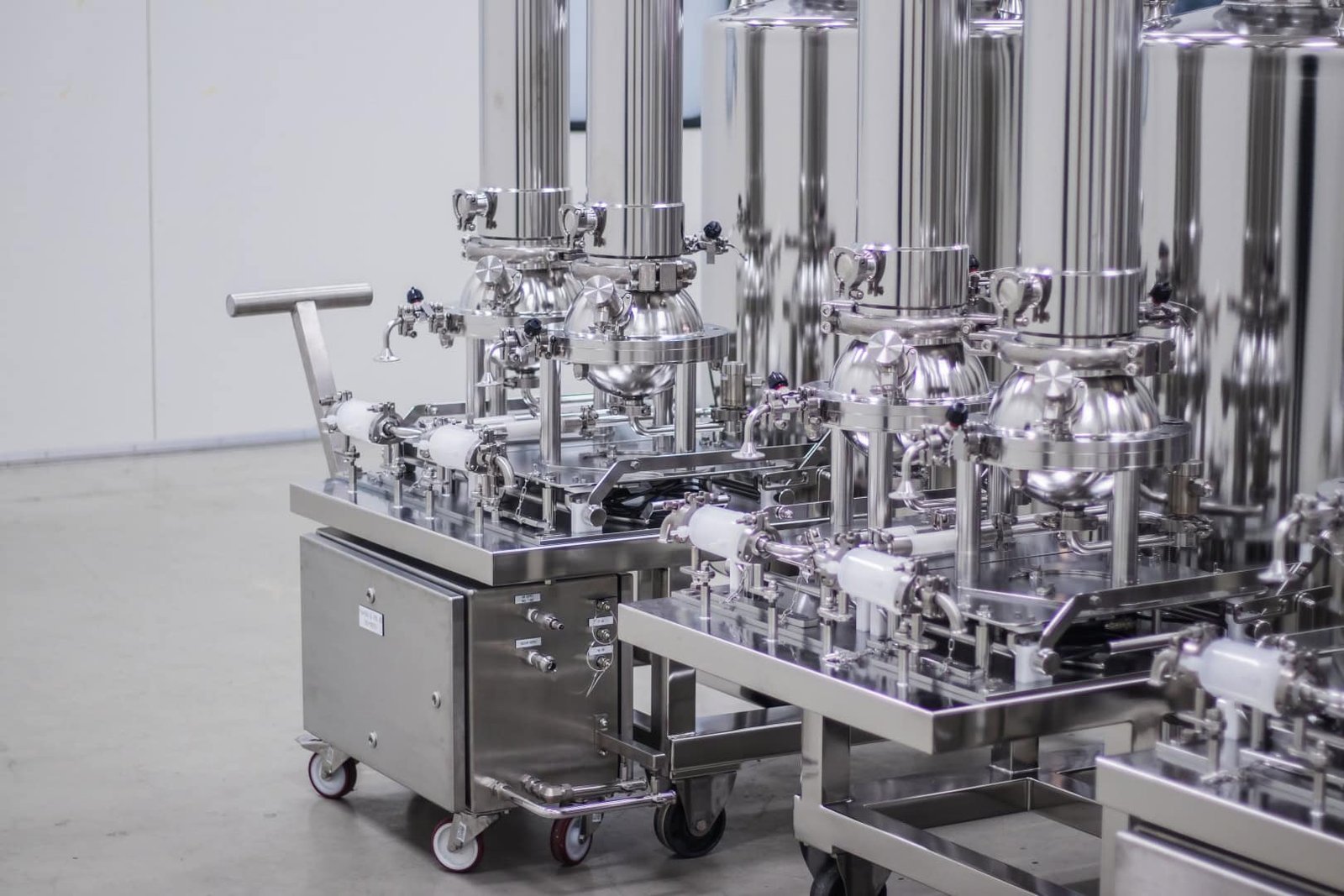
Microfiltration and ultrafiltration
Microfiltration and ultrafiltration are similar in many ways. Both systems use membranes to filter contaminants from the medium. The membranes and in particular the pore size of those membranes determine the extent to which the medium is filtered. This is also where we find the most important difference between MF and UF: the pore size is larger in microfiltration than in ultrafiltration. Pore size determines how many particles can pass through. This is also the reason why a microfiltration unit is often followed by an ultrafiltration unit.
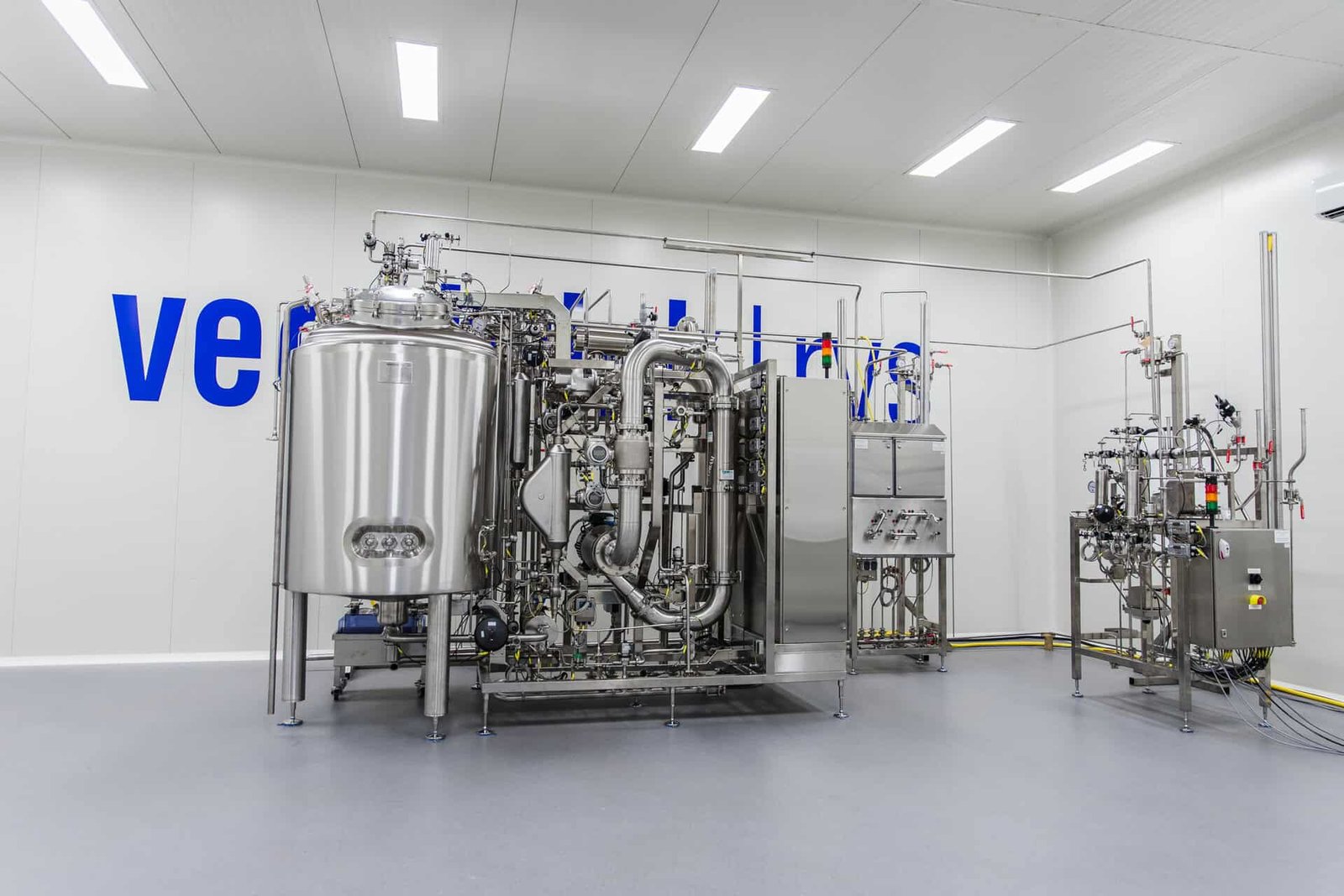
Veenbrink RVS’s microfiltration and ultrafiltration skids are delivered completely turnkey. By using an integrated approach to mechanics, electrical systems, instrumentation and automation, the skids can be designed, produced, validated and installed as plug-and-play systems.
Downstream processing
While the fermentation process is an upstream process where microorganisms are grown in a controlled environment of bioreactors, filtration is often seen as a downstream process. The downstream process basically consists of the separation and purification of the harvest generated during fermentation in the upstream process. This is performed by means of centrifugation, filtration and chromatography. However, some separation and filtration steps can also be characterised as upstream processes, such as the separation of cells from the culture broth during harvesting using an ISF (Internal Spin Filter) or ATF (Alternating Tangential Flow).