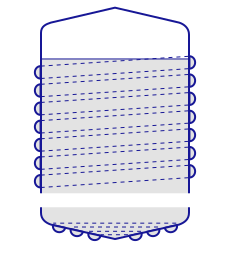
Temperature & pressure
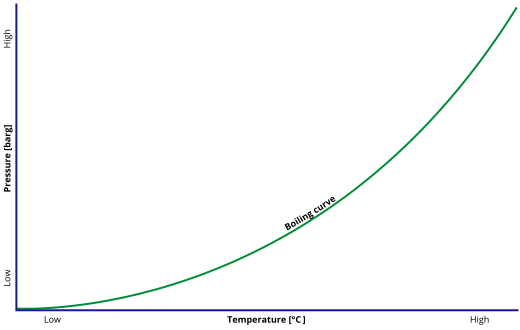
Key parameters that determine whether a process runs efficiently are pressure and temperature. The “ideal gas law” states that pressure and temperature are directly related. A pressure difference in or around a process tank can be created, among other ways, using a pump or a water column. To create temperature differences, the process industry makes use of so-called “jackets.” These jackets come in many types and sizes. The types applied by Veenbrink RVS are generally produced in-house.
Power, maximum pressure and costs
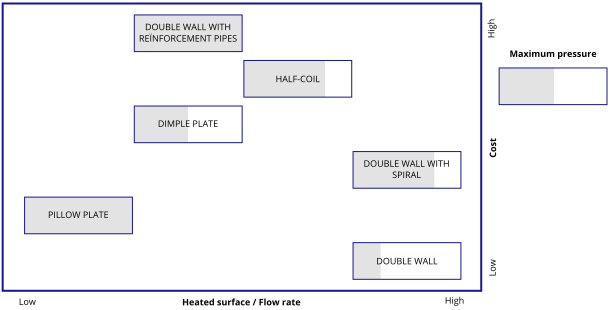
The selection of the optimal type of heating or cooling always depends on three parameters: capacity, maximum pressure, and cost. The capacity is usually related to the maximum achievable flow rate and heating surface area. In addition, each type has its own specific advantages and/or disadvantages.
An example of an affordable and easy-to-install solution is a silicone heating mat. Its drawback is that the capacity is relatively low and cooling is not an option. A “pillow plate” is an example of a jacket that can withstand very high pressure, but on the other hand does not deliver the highest capacity. A more expensive solution is a (possibly reinforced) double-wall jacket. When properly designed, it can handle both very high pressure and deliver high capacity.
Heating & cooling
The casing and base can be configured in various combinations.
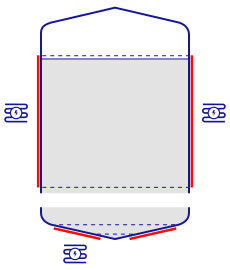
Electric heating
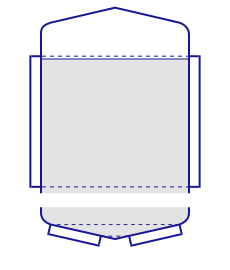
Double wall
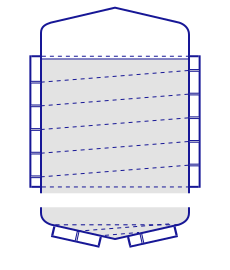
Double wall with spiral ribbon
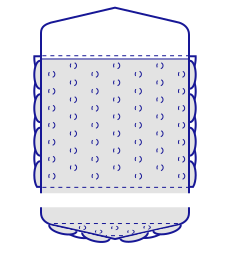
Pillow plate
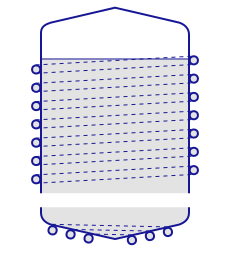
Coil
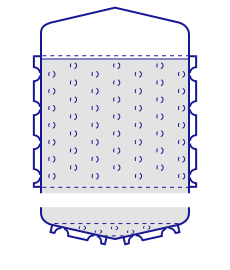
Dimple plate
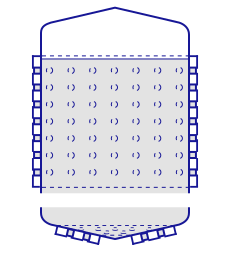
Double wall with reinforcement pipes