



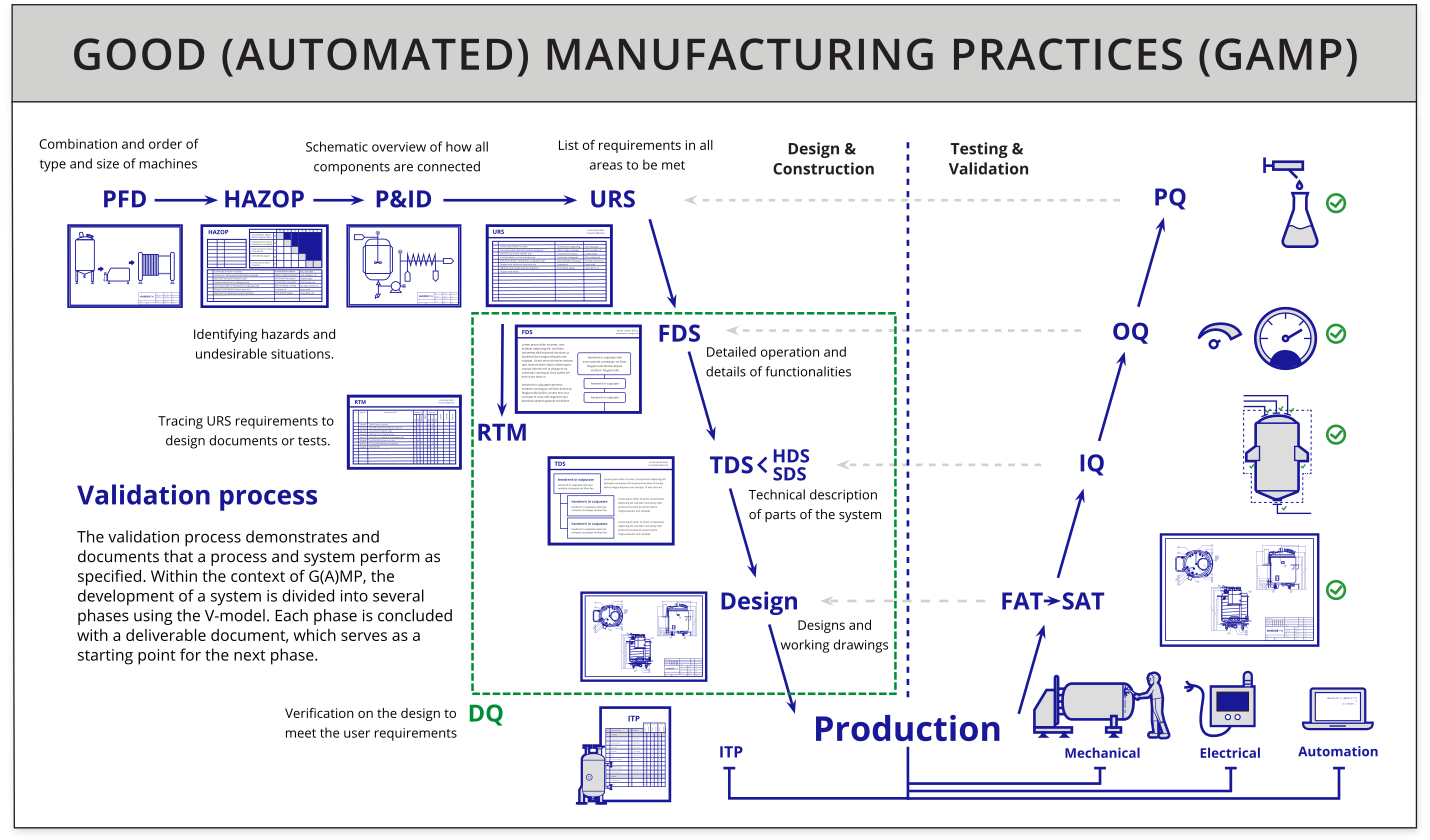
Validation
Validation demonstrates and documents that a process and system does what it was specified to do. Within the G(A)MP practices, the development of a system is divided into a number of phases using the V-model. Each phase concludes with a delivery document, which serves as a starting point for the next phase. The aim of validation is to ensure that processes are reliable and deliver high-quality products. In the pharmaceutical and food industries, the focus is often on animal and human health. Risks must therefore be reduced to an acceptable level. In order to demonstrate this, it is important to maintain thorough documentation. Validation is the means of demonstrating and documenting that a process and associated system does exactly what it was specified to do.
Testing is therefore central to the entire validation process. For each specification or design phase on the left side of the V-model, there is a corresponding integration and testing phase on the right side. For all test phases, a protocol has been prepared in advance on the one hand and a report with approval of the phase on the other. For example, a FAT protocol is concluded with a FAT report.
Acceptance: FAT & SAT
To meet G(A)MP requirements and government inspections, simply testing systems is not enough. There must be demonstrable evidence that the systems perform exactly to their specifications. Malfunctioning systems can lead to dangerous situations, financial loss, damage and even injuries and loss of life. The aim of the Factory Acceptance Test (FAT) and Site Acceptance Test (SAT) is to identify quality problems as early as possible in the process life cycle and to correct them. The FAT and SAT are acceptance tests: a well-planned, documented, and managed engineering approach for commissioning and handing over facilities, systems, and equipment to the end user.
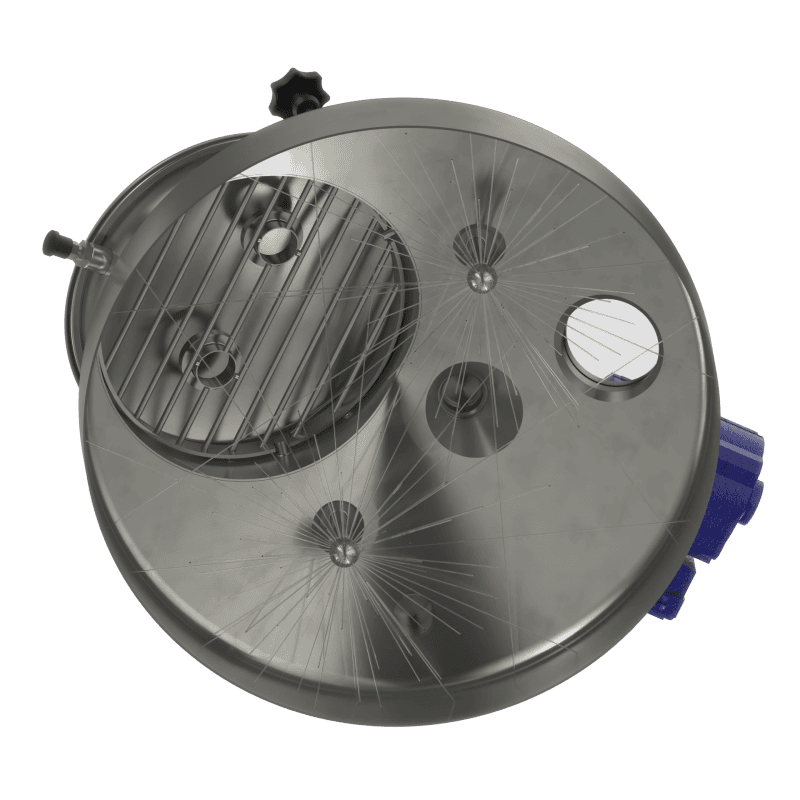
Both the supplier and the user have a major interest in the delivery of new installations: the user wants an installation that is suitable for the intended use with minimal disruptions during use; the supplier wants to minimise aftercare costs. To fulfil this common interest, any new installations undergo various tests. First, the FAT is performed on site at Veenbrink RVS. A test installation is built for this purpose, largely accommodating the final system, in order to simulate various situations. Any deviations can be detected at an early stage, where they have little consequence and can be quickly remedied. This is completed even before the installation is delivered to the customer site. After performing the FAT and resolving any errors detected, the system is transferred to the customer site and integrated with other systems and networks. The SAT or integration test takes place on site. The connection and interaction with adjacent installations can now be tested. It also allows for testing whether the system works using locally available mains and connections, such as electricity, water, steam, compressed air or CIP cleaning systems. In addition, end users can be involved in the execution of the tests.
Qualification: DQ, IQ, OQ & PQ
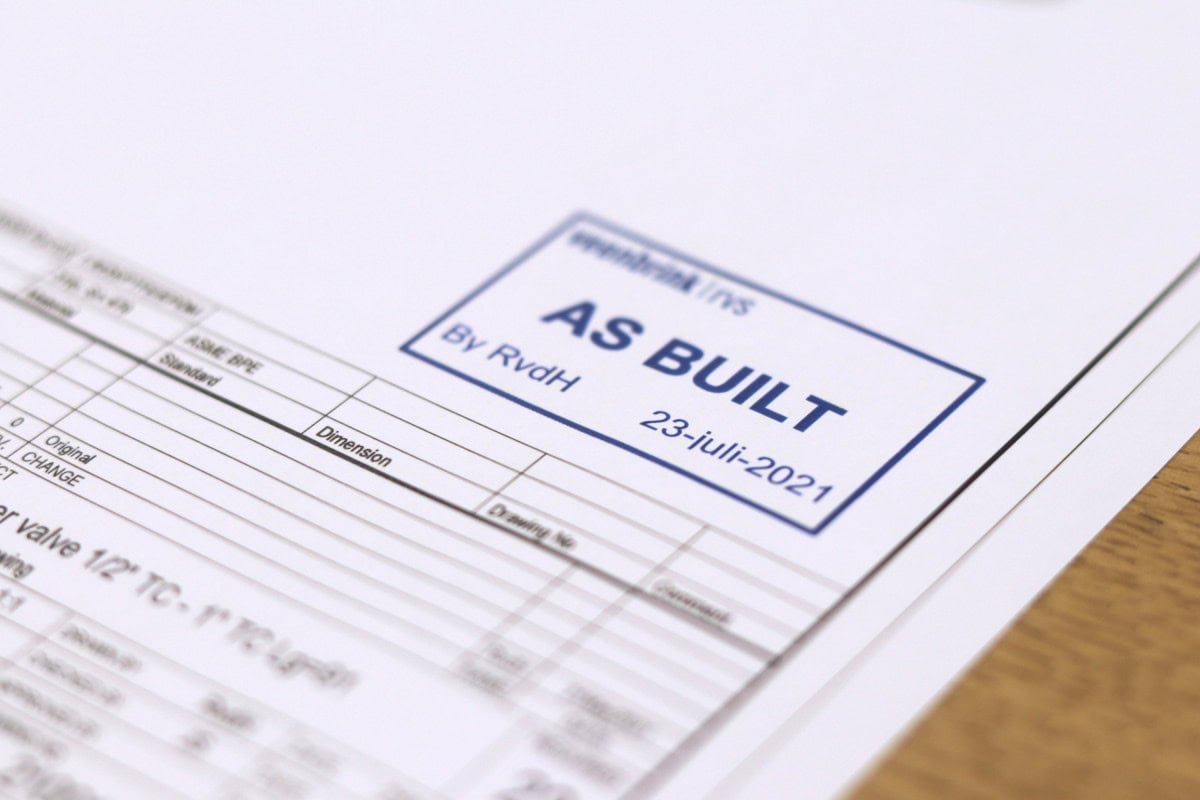
While the FAT and SAT fall under acceptance tests, the IQ, OQ and PQ concern qualification or user tests. FAT and SAT are sometimes also referred to as pre-qualifications, designed for allowing effective qualification. Design Qualification (DQ) is actually completed before process equipment is even produced. During Design Qualification, the design is critically assessed and approved at various stages: from a conceptual design to a fully developed and detailed design. The Installation Qualification (IQ) checks the system against the technical specifications. The equipment is also checked for correct connections and installation. The Operational Qualification (OQ) is designed to test whether all aspects of the device that could affect product quality actually perform as intended. Performance Qualification (PQ) tests the actual performance of the system within the organisation. This primarily focuses on the quality of the output delivered, often by completing a certain number of runs of the desired end product.
Some of the results from the FAT and SAT tests can be incorporated into the qualification tests. This can be very advantageous. It results in tremendous cost savings and potentially also reduces elapsed time. After all, why re-test everything when all of the test results are already available? However, sometimes the end user is forced to invest in the quality of the supplied documentation. Risks must be taken into consideration in this respect. Depending on the installation’s impact on the end product’s quality, a decision may be taken to conduct qualification tests in addition to the FAT/SAT acceptance tests or to forego these tests.